https://www.hazmatschool.com/blog/respiratory-protection-standards/
https://www.dir.ca.gov/DOSH/DOSH_Publications/respiratory-protection-employer-guide.pdf
https://www.dir.ca.gov/DOSH/DOSH_Publications/respiratory-protection-employer-guide.pdf
PPE

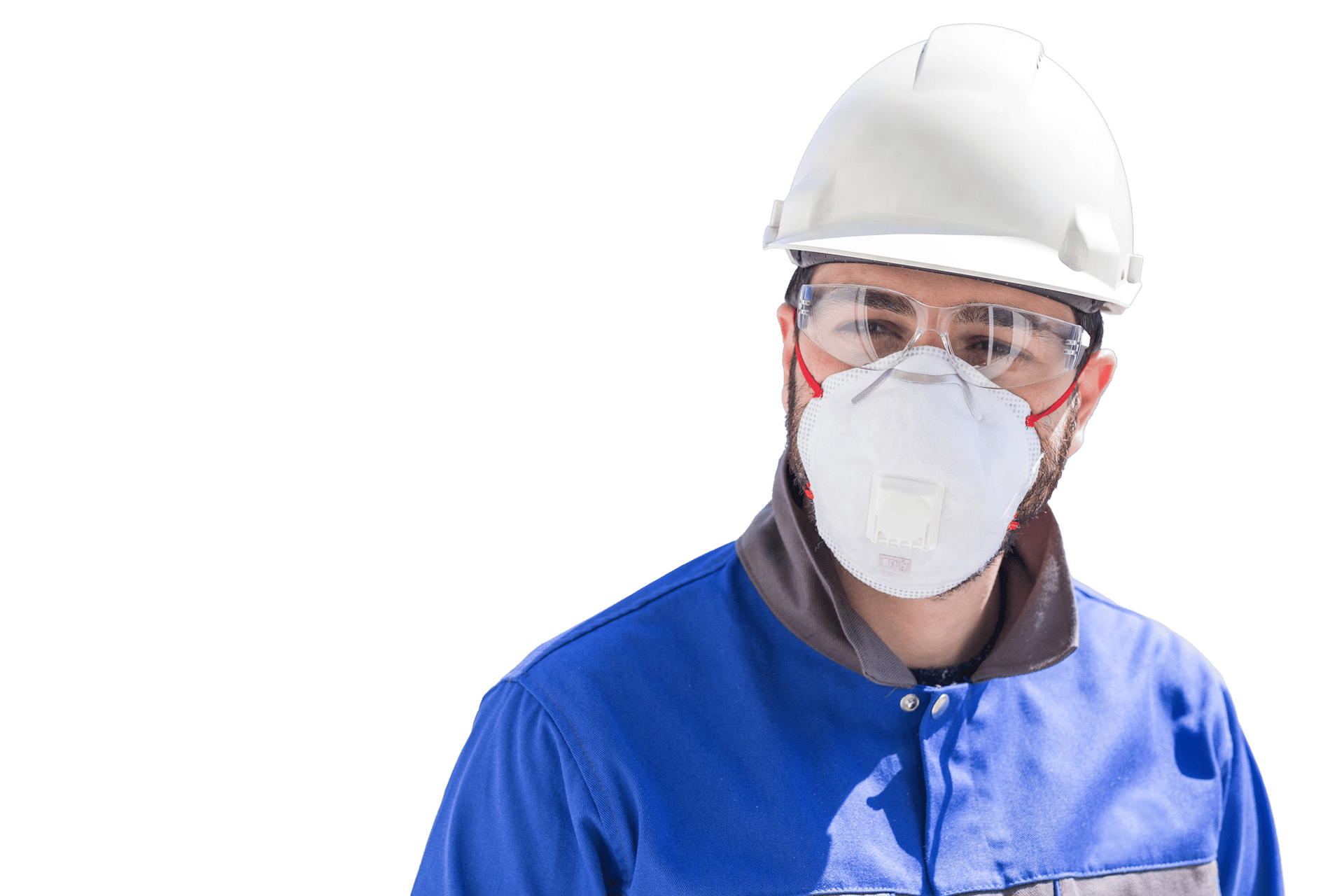
the mask
Photo: Funtay / iStock / Getty Images Plus
By Steve Gonzales
T
he danger presented by airborne contaminants, though very real, is sometimes not immediately obvious.
Exposure to certain contaminants can sometimes prompt immediate disorientation or loss of consciousness. Other long-term, small exposures can cause lung disease, however, that may not become apparent for years.
Both potentialities are reasons why respiratory protection in contaminated environments must mean more than throwing on whatever mask is handy. It means complying with regulations, knowing the best gear for the situation, fitting that gear properly, and training employees on its use and maintenance.
Respirator regulation
The Occupational Safety and Health Administration (OSHA) issues mandatory standards —specifically, OSHA 29 CFR Part 1910.134 — regarding the use of respirators in the workplace. The National Institute for Occupational Safety and Health (NIOSH) governs the respirators. While not a government agency, the American National Standards Institute (ANSI) sets forth best practices guidelines for respirator programs and air quality.
OSHA and NIOSH controls mandate the elimination of and substitution for respiratory hazards where possible, followed by physical changes to the workplace and administrative controls (changes in activities/practices/actions). The use of respirators (personal protective equipment, or PPE) is considered a last resort.
Which respirator is right?
Simply, a respirator is a device that protects the user from hazardous gases or particulate in the atmosphere. A tight-fitting respirator may cover the nose and mouth or the entire face, while a loose-fitting respirator covers the head.
An air-purifying respirator filters the outside air, removing contaminants, and comes with a cartridge or filter that will have to be changed on schedule or as dictated by performance. Atmosphere-supplying respirators provide breathable air from a tank that is either carried by the user or attached to the user via a hose.
Choosing the right respirator for the job involves:
• An exposure assessment
• Job site configuration, temperatures, and humidity
• The worker’s comfort, physical condition, and on-site physical demands
• Knowledge of the specific contaminant(s) — e.g., gas or vapor, or biological — and whether it has an available material safety data sheet (MSDS) or has specific mandated or recommended exposure levels
• Selecting the proper assigned protection factor (APF) — the level of protection provided by a properly fitted and used respirator — for the given contaminant
Employees should be given multiple model options within the range of designs considered appropriate to the job.
Fitting a respirator
Employees should be given multiple model options within the range of designs considered appropriate to the job. Individual comfort can help ensure proper use.
Fitting should be tested in one or both of two ways:
1. Qualitative: Simply, a substance is introduced by a tester in the vicinity of the wearer. If the wearer — through taste, smell, or other reaction — can detect it, the respirator isn’t correctly fitted.
2. Quantitative: The respirator is worn by the user and connected to a mechanical measuring device. Upon release of an aerosol or controlled negative pressure, the device determines whether the respirator is functioning effectively.
Controlled environment testing of tight-fitting respirators will identify the best make, model, and size for the user. It is also an opportunity to identify respirator misuse review proper methods for putting on and wearing the respirator chosen.
Respirator training and maintenance
Ample time should be allotted within the workday for both training on and maintenance of respirators. Employers should create dedicated space for maintenance and storage of PPE. A training program should identify the type of contaminants present, avoidance thereof, the dangers of those contaminants, and steps to take when exposure occurs.
Training and maintenance should also include:
• A review of regulatory requirements
• The capabilities and limitations of the respirator
• Factors that impact its performance
• How to put it on and take it off
• How to use it when it malfunctions
• How to inspect, service, clean, and store the respirator
Respiratory protection certification is not an OSHA requirement, but it is helpful both to document compliance for the employer and as proof of training for an employee moving to another assignment.
Breathe easy
The global COVID-19 pandemic brought into sharp focus the need for everyone to properly deploy respiratory protection. It also pointed out how cavalier some users can be about correct procedures. Reinforcing all the ways respiratory protection is critical to your operation will help to ensure a safe, productive, and OSHA-compliant environment for any company, from the executive suites to the production floor.
Steve Gonzales is CEO of Technical Safety Services, which provides testing, certification and calibration of equipment and controlled environment crucial to the success of the biopharma, medical device, academic research and food production industries.
Nov/Dec 2024
VOL. 58 NO. 9