By Dan Markiewicz
practices
MANAGING BEST
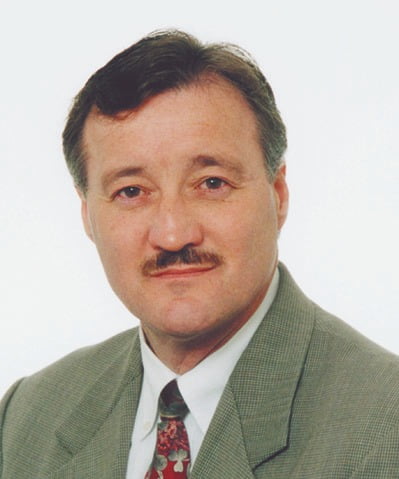
By Dan Markiewicz
First-hand perspective: IH practice offers door to opportunities
T
ed Rader will graduate from medical school this May 2025. Prior to medical school, Ted worked for 10 years as an Industrial Hygienist. For the next four years, Ted will serve his residency in the practice of psychiatry. Readers of ISHN, particularly those that do IH work, may benefit from Ted’s experiences, learn why he chose the psychiatry practice, and take a brief look at his future plans.
In Ted’s words
As an osteopathic physician, I am optimally positioned to care for the individuals who make up our healthcare system. My background as an Industrial Hygienist (IH), who was certified in the field, CIH®, combined with my passion for psychiatry, has given me the skills and perspective needed to advocate for the well-being of healthcare professionals. Physicians, nurses, PAs, and other healthcare workers care for others, yet they are frequently overlooked when it comes to their own mental and physical health. We cannot let our healthcare team fall through the cracks. One of the osteopathic tenets, “the body is a unit; the person is a unit of body, mind, and spirit,” speaks directly to why it is so vital to put on our own oxygen mask first before helping others.
Throughout my 10-year career as an IH, I was responsible for identifying and mitigating hazards. Through this experience, I learned how to address not only the obvious hazards but also the often ignored and overlooked ones, such as psychosocial stress. Long hours, emotional strain from patient care, and the constant pressure of potential malpractice create an environment that demands mental resilience; these are just a few of the chronic stressors physicians face. I have seen this firsthand during my third and fourth years of medical school, where physicians often shoulder immense responsibility without adequate stress management.
As an osteopathic physician now serving my four-year residency in psychiatry, I am in a unique position to support the mental health of my colleagues in healthcare. My training in osteopathic principles, which emphasize the interconnectedness of the mind, body, and spirit, equips me to approach the challenges faced by healthcare professionals through the unique lens of an industrial hygienist. Healthcare workers are much more than just their physical performance or clinical expertise. They are healers entrusted with the care of the most vulnerable. Their mental and emotional well-being is crucial to their ability to provide high-quality patient care. Why should we even consider anything less?
Photo: Javi Sanz / E+ / Getty Images
Osteopathic philosophy
In caring for and managing our healthcare team, I will emphasize osteopathic philosophy. A philosophy and way of practicing medicine that penetrates deep into the roots of a problem, abating symptoms and leaving only an effectively functioning member of the medical team: a healed healer. One who is in prime position to heal. This advocacy for the mind, body, and spirit of healthcare workers aligns with osteopathic philosophy and positions me to be an expert by combining my previous experience with clinical medicine. There is no Occupational Safety and Health Administration (OSHA) permissible exposure limit (PEL) for stress. We ought to ask why, and we ought to give this thought.
Ultimately, my goal is to create a healthier, more sustainable workforce in healthcare through the guiding principles of osteopathic medicine. By addressing the mental health needs of my colleagues, I will help cultivate a resilient team of professionals capable of providing exceptional care while maintaining their own well-being. Because taking care of us is taking care of them.
Mental health
While I primarily recognize the need for the mental well-being of colleagues in healthcare settings, I urge my IH friends everywhere to be cognizant of the mental condition of workers under their charge, whatever job is being performed.
The Pregnant Workers Fairness Act (PWFA), for example, recognizes “industrial hygienists” to be among the healthcare provider team that is available to help pregnant workers avoid detriments to their “physical or mental condition.” The PWFA final rules provide examples of varying jobs that pregnant workers hold that have a mental health component.
Consider Eleana, a park ranger, who is experiencing postpartum depression that causes an “inability to sleep, severe anxiety, and fatigue.” Eleana’s antidepressant medication is causing “dizziness and blurred vision” that may increase safety risks at her job. Taylor is a newly hired member of the waitstaff, who needs reasonable accommodation to attend therapy appointments for postpartum depression. Riya is a data analyst who is pregnant, and her healthcare provider recommended that she stop taking her current ADHD medication and switch to another medication. As Riya is adjusting to her new medication, she finds it more difficult to concentrate and asks for a quiet place to work. Quiet may be subjective for most people, but not for an IH. IHs are uniquely positioned to help identify and implement reasonable accommodation on noise reduction, or any other workplace hazard, that best serves the interests of pregnant workers and their employers.
Throw OSHA in the wood chipper and many companies will invest less in safety and health, leading to more injuries and fatalities.
All workers
Healthcare worker, pregnant worker, or any worker should have protection and support for their mental health. Whether your workplace adopts ISO 45003:2021 Occupational Health and Safety Management — Psychological Health and Safety At Work: Guidelines For Managing Psychological Risks — or uses some other methods, mental health concerns and control should be on your workplace radar.
Future plans
During the next four years I will be taking a deep dive into the practice of psychiatry. Beyond that the future is uncertain. I may remain in psychiatry, or I may test the waters into some aspect of occupational or environmental medicine, or whatever. Armed with a degree in medicine and a passion to help others, I will have many options in my professional life. I have been in the trenches of IH. I have worn PPE, worked at chemical spills, and I have embraced the many things that IHs must do to help others. The value of IH will always factor into my future decisions.
It wasn’t easy making the decision to pursue medical school in my mid-thirties. There were plenty of reasons not to do it, but I knew that if I didn’t try, I would have some lingering regret. Taking that leap required courage. I’ll be nearly forty years old when I graduate from medical school, when the mean age of my fellow graduates is between 26-28 years old. I believe, however, that the ten years that I practiced IH and earned the CIH® did help me become a better medical student and undoubtedly will make me a better physician. If you are a young CIH® the path to becoming a physician remains an option. For those of you that have chosen a career as an IH, remember that you are part of the healthcare team that includes physicians, nurses, PAs, and other healthcare workers that care for others. Keep learning and keep your options open. Sometimes the most rewarding paths in life begin with a step that feels impossible. I encourage anyone reading this, especially those who think it’s too late to start something new, to be brave and take the chance. You just might surprise yourself.
Dan’s words
Thank you, Ted, for sharing. I will watch your future success with keen interest.
Dan Markiewicz, MS, CIH, CSP, CHMM, is an independent environmental health and safety consultant. He can be reached at (419) 356-3768 or by email at dan.markiewicz@gmail.com.

May 2025

VOL. 59 NO. 4