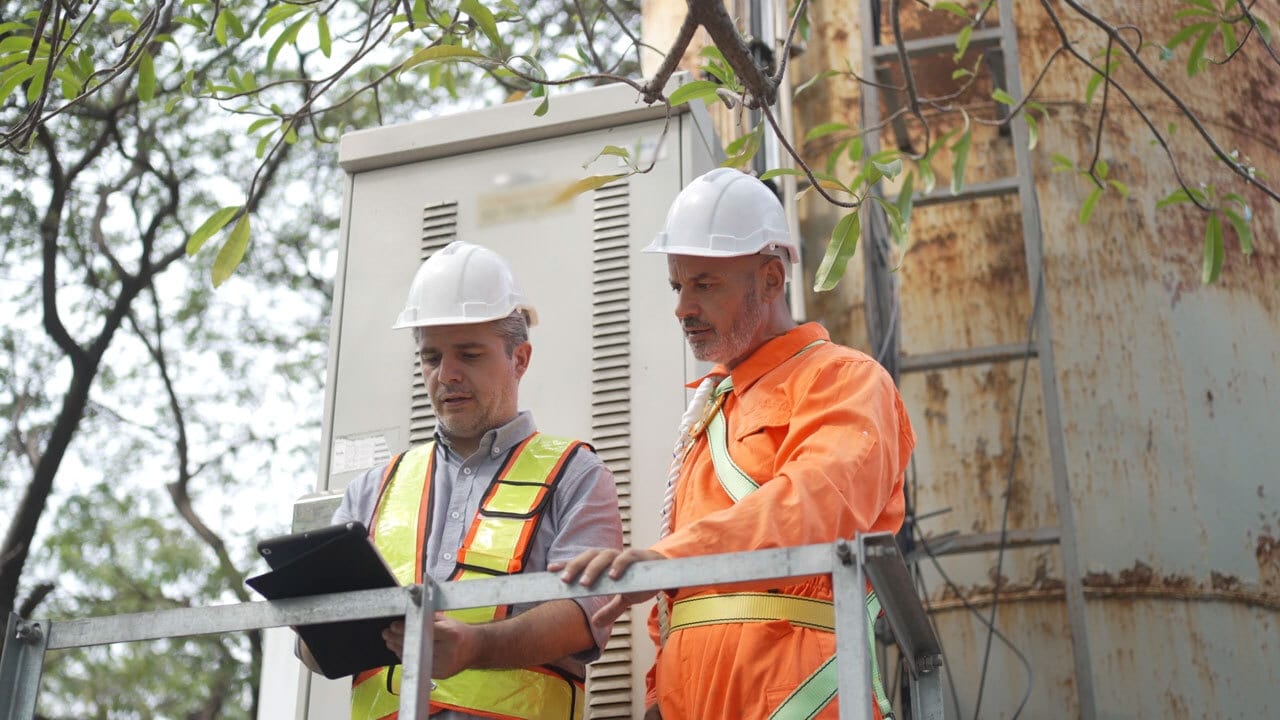
PPE

Photo: kali9 / E+ / Getty Images
not a Rulebook
Safety as a Value
How to create a culture beyond checklists and PPE compliance
By Naba Rizwan
I
n today’s complex work environments, safety cannot be reduced to checklists or personal protective equipment (PPE). While compliance with regulations and the correct use of PPE are essential baselines, they do not by themselves prevent incidents or build a resilient safety environment. A compliance‑only focus tends to foster a reactive mindset, addressing hazards after they occur rather than preventing them before they arise.
A robust safety culture embeds safety into everyday thinking, actions, and decisions at all levels of an organization. It transforms safety from a procedural requirement into a shared organizational value one where employees are encouraged to identify risks early, report concerns without fear, and participate actively in ongoing improvement.
Research and industry experience show that organizations adopting proactive safety practices such as leading indicator tracking and continuous competency development tend to experience fewer incidents, higher engagement, and greater operational resilience.
Why Safety Compliance and PPE Alone Don’t Prevent Workplace Incidents
Safety compliance and PPE are necessary components of any occupational health and safety system. They help organizations meet legal requirements and establish baseline hazard controls. However, compliance and PPE alone do not prevent most incidents because they often lead to a reactive, checklist-driven approach. This mindset focuses on meeting minimum standards rather than anticipating and mitigating hazards before they result in harm.
Compliance measures tend to concentrate on what was done, such as forms completed or PPE provided, rather than how well risks are understood and managed. Without deeper engagement and situational awareness, workers and managers may assume safety is achieved if procedures are followed. This often leads to overlooking emerging or context-specific risks.
While PPE is vital, it is a last-line control. Its effectiveness depends on proper use, training, fit, and worker understanding. In dynamic workplaces, hazards evolve faster than static compliance measures can anticipate. This makes proactive risk recognition and response critical to reducing incidents.
The Limitations of Checklist-Driven Safety Programs
Checklist-based safety programs provide structure and ensure verification of basic requirements, but they do not inherently advance deeper safety performance. They ensure procedures are documented, but they do not assess whether workers truly understand or can apply safe practices in real-world conditions.
Checklists are inherently static and cannot capture the complexity of dynamic work environments. Using them without reinforcing engagement, critical thinking, and feedback mechanisms can lead to a mechanical "tick-box" mentality. In this state, tasks are completed to satisfy documentation requirements rather than to prevent harm. Moreover, checklist conformity alone does not build intrinsic motivation for safe behaviour. When employees perceive compliance as primarily for audits or inspections, they may comply only when being observed rather than internalising safety principles as core responsibilities.
How Compliance-focused Safety Creates Hidden Workplace Hazards?
When organizations focus mainly on meeting minimum regulatory requirements, such as completing forms and supplying PPE, they can overlook risks not covered by those standards. Compliance sets a baseline rather than a comprehensive safety strategy. This allows site-specific or evolving hazards to go unnoticed until they cause harm.
This tick-box mindset often creates a false sense of security. Workers and leaders may believe that compliance equals safety, which can reduce critical thinking and discourage proactive problem-solving. When reporting systems are punitive or centered on blame, employees may avoid reporting hazards or near misses altogether. This leaves hidden risks unresolved.
As a result, hidden hazards persist and only come to light after an incident has occurred. This undermines safety performance and prevents organizations from addressing risks before they cause real damage.
Without deeper engagement and situational awareness, workers and managers may assume safety is achieved if procedures are followed. This often leads to overlooking emerging or context-specific risks.
How to Build a Proactive Workplace Safety Culture
Creating a proactive safety culture means shifting from reactive compliance to systematic hazard prevention. This transition requires ongoing commitment, engagement, and improvement across the entire organization. Proactive safety focuses on identifying risks early and learning from near misses rather than waiting for an incident to occur.
1. Secure Leadership Commitment
Transformation begins at the top. Leaders must prioritize safety in their daily decisions. This includes attending safety meetings, participating in training, and providing the necessary resources for risk management. When leadership is consistently involved, it signals that safety is a genuine value and not just a legal requirement.
2. Conduct Regular Training and Education
Ongoing training helps workers identify and manage hazards effectively. Programs should include real-world scenarios that reflect actual workplace conditions. Training must be updated regularly to stay relevant to new risks, which ensures that knowledge is both retained and applied.
3. Encourage Open Communication
Establish reporting systems that do not punish workers for identifying hazards or near misses. Employees must feel confident that raising a concern will lead to constructive action rather than disciplinary measures. A transparent culture captures early warning signals and builds trust across the workforce.
4. Involve Employees in Safety Decisions
Empower staff to participate in safety committees and hazard identification programs. When employees help make decisions, they take greater ownership of the outcomes. This involvement also ensures that safety measures are grounded in actual frontline experience.
5. Monitor, Learn, and Improve Continuously
Regularly assess safety performance by looking at both preventive measures and past incident data. Track near-miss reports, training participation, and hazard observations to find areas for improvement. Use these feedback loops to adjust practices and treat safety as a constant, evolving process.
Why Continuous Safety Training and Competency-Based Learning are Required
Continuous safety training and competency-based learning are essential because workplace hazards evolve. A one-time course cannot maintain long-term safety awareness or capability. Regular training reinforces core principles, keeps knowledge current with changing risks, and helps embed safe practices into daily routines. This ongoing reinforcement prevents complacency and ensures that safety remains a priority rather than a one-off requirement.
Competency-based learning goes beyond simple awareness. It ensures employees can apply safety knowledge in real situations, which improves hazard recognition and practical responses to risks. When workers maintain these skills, they are better equipped to adapt to new equipment and updated regulations. This proactive approach supports a safer culture and reduces incidents over time.
Concludingly, continuous training builds both knowledge, retention and practical competence. It strengthens performance across the organization and makes safety a sustained part of everyday operations rather than a checkbox exercise.
Conclusion
A proactive safety culture delivers measurable value. Organizations that move beyond compliance checklists and PPE to embrace risk awareness and employee engagement consistently reduce incidents. This shift improves morale and strengthens operational performance. Regular training, open communication, and shared accountability prevent harm before it occurs and reinforce trust across teams.
Rather than waiting for accidents to occur, proactive practices enable early hazard detection. This makes safety a natural part of everyday decision-making. Building such a culture is an investment in both people and performance. It keeps employees safe while enhancing an organization's ability to adapt, improve, and succeed over the long term.
Naba Rizwan is a social media manager and content writer with experience creating engaging, informative content on workplace safety, training, and industry best practices. She specializes in translating complex safety topics into clear, value‑driven narratives that resonate with professionals and organizations alike. Learn more about comprehensive safety training options through her work with organizations like Hazwoper OSHA Training LLC.
March 2026

VOL. 60 NO. 2