By Dan Markiewicz
practices
MANAGING BEST
By Dan Markiewicz
The Industrial Hygiene Law Project Redux: IH Renegades are Needed Now
T
he Industrial Hygiene Law Project (IHLP) was amicus brief presented to the United States Supreme Court in the case of UAW v Johnson Controls, settled in the favor of the UAW in 1991. Johnson centered on whether employers could prohibit women working with lead, governed under OSHA’s 1978 lead standard, unless the women could prove they were unable to bear children.
Nearly one thousand scholarly articles were published following the Johnson ruling to explain its many complex components. One of these articles began as a PhD dissertation and evolved into the book “Litigation as Lobbying Reproductive Hazards and Interest Aggregation” that was published in 2003 by Julianna S. Gonen. Industrial hygienists and other OHS pros are urged to read the book in anticipation of the US Supreme Court hearing a case about the constitutionality of the PWFA and the protection of unborn children - more about this later in this article.
IHLP
The IHLP was the brainchild of Dr. Margaret Phillips, an industrial hygienist employed by U.S. Steel, and Ilise Feitshans, a highly intelligent lawyer from Columbia University (side note, Ilise is now a member of the US Supreme Court bar). According to Gonen, Phillips “felt strongly” that the “view of the industrial hygiene community needed to be heard” but associations such as the “American Industrial Hygiene Association lacked the will to take stances on controversial political issues.” Gonen also noted that the IHLP brief was kept “as innocuous as possible in order to mask the fact that they were representing the views of a ‘renegade’ industrial hygiene faction.”
Photo: kupicoo / E+ / Getty Images
IHLP redux
I was employed as an industrial hygienist by a large corporation, Aeroquip-Vickers (ANV), during the time Johnson was being heard by the US Supreme Court. I, however, was among the 1% of OHS pros housed out of the legal department. When an IH gets to debate risk strategies with attorneys before other departments, such as when HR gets involved, then things often go smoothly. ANV was proactive on hazards to pregnant workers. Things went smoothly.
When I joined the consultant world, I found that most businesses ignored the hazards to pregnant workers, mostly because of a misreading of Johnson. When I was interviewed for a 2002 front page cover story in the USA Today about workers taking employers to court because of birth defects, I was honest in telling the reporter that in my opinion little to nothing was being done by employers to manage risks to pregnant workers. Pregnant? See a doctor. After the USA Today article, I engaged with many plaintiff and defense lawyers to discuss strategies. I went on a presentation spree for several years. I learned a lot.

Counterintuitive strategy
Among the things I learned, was that a “conspiracy of silence” does exist on this topic, as previously observed by Feitshans. When you try to move this topic forward there will be saboteurs left and right, trying to make you fail. I don’t take offense to the opposition’s tactics. After all, it is “just a game” to see who ultimately wins. I like winning.
To help me win, I developed the counterintuitive strategy: You must constrict the influence of AIHA to expand the role of an industrial hygienist.
Counterintuitive examples
Example #1: AIHA is thrilled that “industrial hygienists” are now recognized as “health care providers” under the PWFA. This seems logical but consider that as of late February 2026, a search at AIHA’s website returns “Search Results 0 result for Keyword(s): pregnant workers fairness act.” Which is more probable, AIHA is clueless about the PWFA three years after the law’s passage or AIHA is biased against the PWFA?
Example #2: AIHA prioritizes workplace health issues of national importance. Is this statement true or false? Intuitively, it appears true. However, Justice Kennedy stated, in part, in the US Supreme Court case of Peggy Young v UPS, March 2015, ruling,“This is why the difficulties (e.g. health risks) pregnant women face in the workplace are and do remain an issue of national importance.” When I presented this information to AIHA’s Government Affairs Director, his blunt response to me was that “AIHA has little interest in pregnant workers.” The director’s clarification email to me on July 25, 2015 (that I have maintained as evidence) only made his remarks worse.
I have more examples, and more evidence, that AIHA is more than just an obstacle to the success of the PWFA. I need their members to take my “rage bait” and enter into a public forum to debate this topic. I no longer, however, represent just the views of a “renegade” industrial hygiene faction. I belong to the huge family of “health care providers” under the PWFA that support the law’s success.
When an IH gets to debate risk strategies with attorneys before other departments, such as when HR gets involved, then things often go smoothly.
Future issues
The EEOC’s recent budget proposal includes the following: “Litigation can be expected to climb exponentially during FY 2026 as we enter the third year of enforcement following the PWFA’s June 2023 effective date.”
The main future is more important, however. President Trump appointed Andrea Lucas to Chair the EEOC. He also removed all members of the EEOC commission that he believed were not loyal to him. Lucas does not like that the current PWFA final rules allow “reasonable accommodation” for an abortion appointment.
Space is running out on this article, do yourself a favor, search or prompt AI to explain “A Better Balance and March of Dimes submits amicus brief February 20, 2026, in the case of Texas v. Bondi.” Texas means just the public sector in this case. Bondi is Pamala Bondi, Trump’s US Attorney General. In short, Trump’s mostly appointed judges in the Court of Appeals for the Fifth Circuit (all states that have fetal protection laws) are questioning Trump’s hand-picked EEOC commissioners, such as Andrea Lucas, over technicalities within the PWFA. Trump is going to have his influence on what the PWFA does. My guess is that the Court of Appeals ruling will be turned over to the US Supreme Court for a final verdict. Within this possibility, there is an opportunity to strengthen the role of an industrial hygienist within a revised PWFA final rules. Be keenly aware, the ABB and the March of Dimes use the words “health” or “healthy” ninety-six times in the body of their brief. The word “discrimination” appeared twice, and neither relate to the context of the PWFA. The PWFA is an occupational health law. Period. Equal rights, discrimination, etc. are found in other EEOC laws such as the PDA or ADA.
Conclusion
The AIHA has more than 2,500 volunteers working with policymakers to protect workers. The above is a bone they may chew on. AIHA should huddle with their like-minded associations and use some of their legacy goodwill and do something good at this moment. The creators of the IHLP believed that AIHA “lacked the will” to become politically involved. This lack of will by AIHA at the moment, however, stalls the success of the PWFA. Lastly, the IHLP was concerned about being viewed as a “renegade” faction of industrial hygienists. More renegades are needed now to support the PWFA. Support for the PWFA advances the role and prestige for all industrial hygienists.
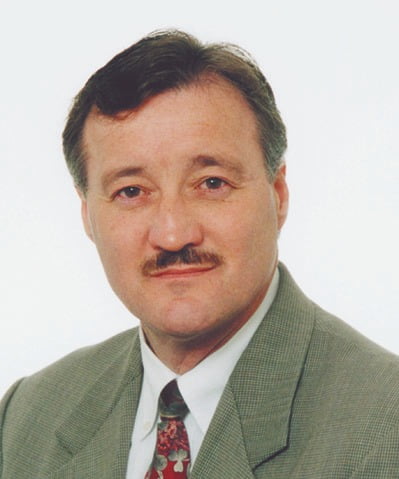
Dan Markiewicz, MS, CIH, CSP, CHMM, is an independent environmental health and safety consultant. He can be reached at (419) 356-3768 or by email at dan.markiewicz@gmail.com.

March 2026

VOL. 60 NO. 2